

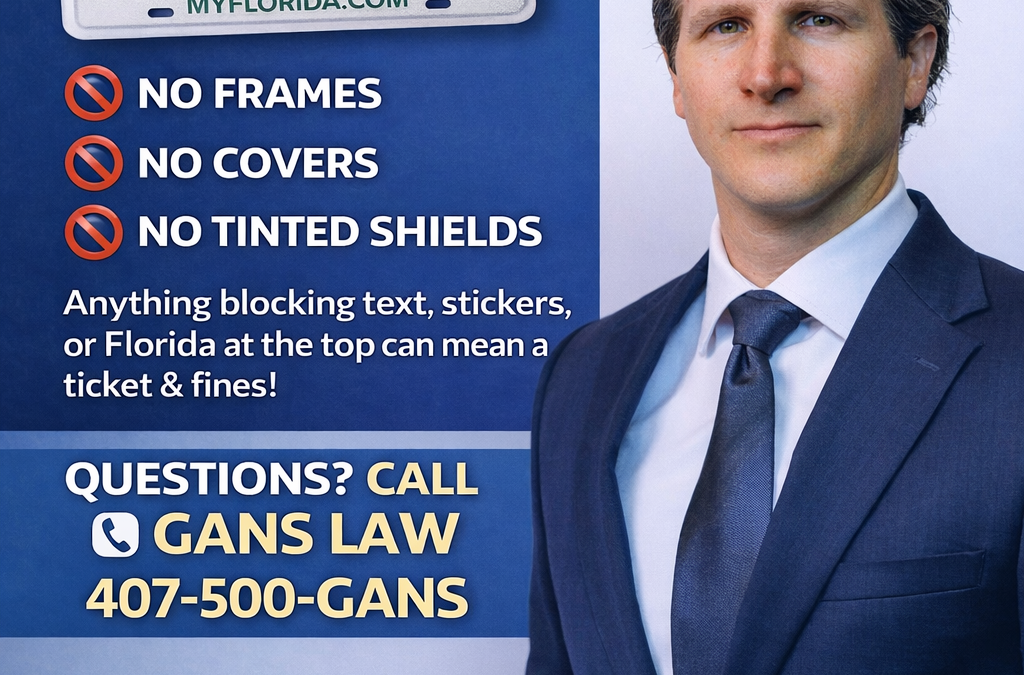
🚨 Florida drivers should be aware of an important update regarding license plate visibility. Law enforcement agencies across the state are increasing enforcement on license plates that are partially blocked or difficult to read. While decorative plate frames and covers are common, some of these accessories may actually violate Florida law.
Understanding these rules can help you avoid unnecessary traffic stops, citations, and fines.
What Is Prohibited on Florida License Plates?
Under Florida law, your license plate must be fully visible and readable at all times. This means that nothing can block or obscure key parts of the plate.
Items that may violate the law include anything that covers or hides:
-
The numbers
-
The letters
-
The registration sticker
-
The word “Florida” at the top of the plate
Common accessories that could lead to a traffic stop include:
-
License plate frames that cover text
-
Tinted plate covers or shields
-
Decorative plate protectors
-
Any object or material that blocks visibility
Even if the obstruction seems minor, officers may still issue a citation if the plate is not clearly readable.
What Are the Penalties?
If your license plate is considered obstructed, you may face:
-
A traffic citation
-
Fines
-
A potential traffic stop by law enforcement
In many cases, drivers do not realize their plate frame or cover violates the law until they are pulled over.
Why Is Florida Enforcing This Law?
The purpose of the law is to ensure license plates are easily visible for identification and safety purposes.
Clear license plates help with:
-
Toll road systems
-
Traffic cameras
-
Law enforcement identification of vehicles
-
Public safety investigations
When a plate is partially covered, it can make it difficult for authorities and automated systems to properly identify vehicles.
Legal Alternatives for Personalizing Your Vehicle
Many drivers enjoy customizing their vehicles. Fortunately, there is still a legal way to add personality without risking a citation.
Florida law only requires one license plate on the rear of the vehicle. Because of this, drivers may choose to place a decorative plate on the front of their vehicle.
This allows you to express your style while keeping your legally required plate fully visible.
What To Do If You Receive a Ticket
If you receive a citation related to a license plate violation or any other traffic offense, it is important to understand your legal options. In some cases, tickets can be challenged or reduced depending on the circumstances.
Bonus Tips!
Can you get a ticket for a license plate frame in Florida?
Yes. If the frame blocks the numbers, letters, registration sticker, or the word “Florida,” officers may issue a citation.
Are tinted license plate covers legal in Florida?
No. Tinted or clear covers that make the plate harder to read can violate Florida law.
Does Florida require a front license plate?
No. Florida only requires a rear license plate on most vehicles.
At Gans Law, our team understands both sides of the system. Our attorneys include professionals who have served as former law enforcement officers and prosecutors, giving us valuable insight into how traffic cases are handled.
If you have questions about a citation or need legal help, we are here to assist.
📞 Call Gans Law at 407-500-GANS

Recent Comments