

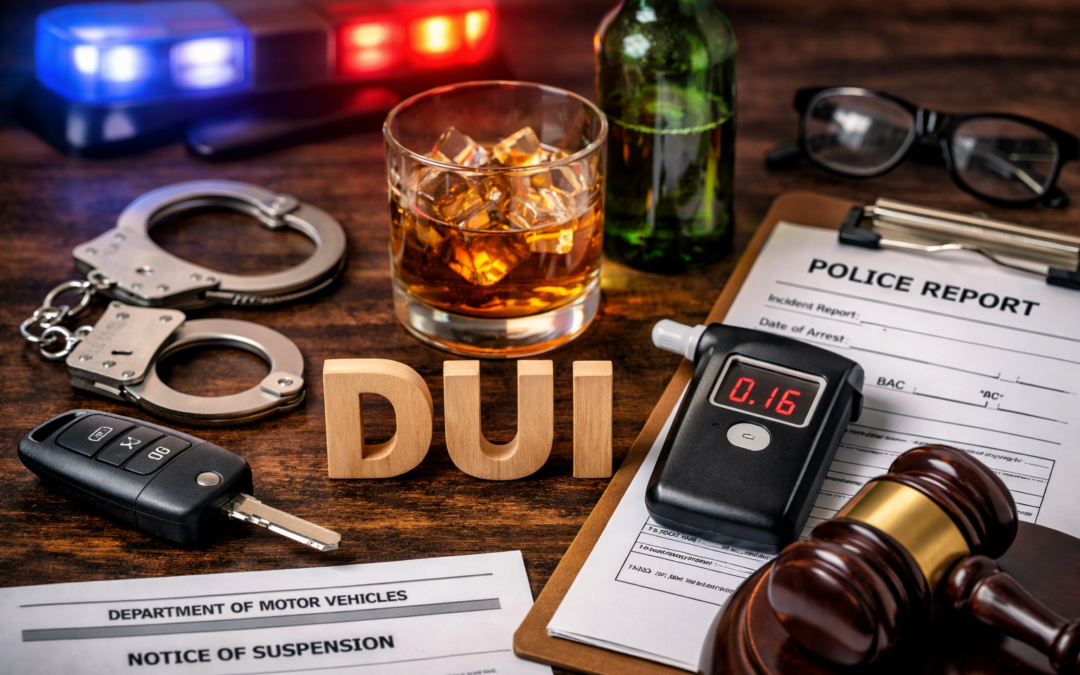
Picture this: you go out to dinner, have a couple glasses of wine, and you’re driving home when you see flashing red and blue lights in your rearview mirror. A few questions later, you’re being asked to do roadside exercises… and the next thing you know, you’re in jail for DUI.
That “how did this happen?” moment is exactly why we recorded this episode of Badges to Briefcases. DUI arrests are one of the most common criminal arrests we see—and they’re also one of the most misunderstood.
At Gans Law, DUI defense is a major focus. Our team includes former law enforcement, and Attorney Ian Wise brings a unique background: he was a Drug Recognition Expert (DRE)—a specialized certification held by a small percentage of officers—trained to evaluate impairment from drugs and to identify what officers miss in real-world DUI investigations.
Below is a website-ready blog version of the episode, with practical takeaways for drivers in Orlando and Central Florida.
https://www.youtube.com/watch?v=cvpumCiWOVE&t=782s
The 3 Stages of a Florida DUI Case
Most DUI cases follow three big phases:
1) The Traffic Stop: “Why were you stopped?”
As defense attorneys, we start at the very beginning: Was the stop legal?
In Florida, an officer needs reasonable suspicion to stop a vehicle—this is a low standard, but it still matters. If the reason for the stop is weak, unproven, or inconsistent with the video evidence, the rest of the case may unravel.
A major issue we see in Central Florida: many agencies don’t have dash cams, so it can become the officer’s word versus the driver’s word. That’s why video evidence (dash cam/body cam) can be everything.
2) Field Sobriety Exercises (FSEs): “The roadside tests”
Florida’s standardized roadside exercises are typically:
- HGN (Horizontal Gaze Nystagmus) – the “eye test” with the pen/finger
- Walk-and-Turn
- One-Leg Stand
They’re “standardized” because they’re supposed to be explained and administered the same way each time (based on NHTSA standards). In reality, we regularly see officers:
- skip steps
- give unclear instructions
- count “clues” the driver was never told to avoid
- ignore injuries/medical issues that should disqualify the test
And here’s a key point we emphasized: police reports often sound worse than the video. We routinely compare the report to the body cam and find major discrepancies—sometimes the difference between a conviction and a dismissal.
3) Chemical Testing: breath, blood, or urine
After arrest, a driver is typically taken to a breath test center where officers observe the driver and then request a breath test under Florida’s implied consent law.
Refusal law changed in Florida (effective Oct. 1, 2025). Under House Bill 687 (“Trenton’s Law”), refusing a lawful post-arrest breath or urine test can now be a criminal offense even on a first refusal—not just an administrative license suspension.
Florida’s implied consent statute still provides administrative license suspensions tied to refusals (commonly described as 1 year for a first refusal and 18 months for a subsequent refusal).
Bottom line: chemical testing decisions have gotten more legally serious in Florida since October 2025.
Why Video Evidence Matters So Much in DUI Cases
One of the most important points from the episode:
Reports can be exaggerated, mistaken, or shaped by “confirmation bias.” Sometimes an officer truly believes someone is impaired and later remembers the facts in a way that supports that belief. Other times, reports may be “padded” to justify an arrest.
Either way, the impact on the client is the same—until the video tells the real story.
Can You Refuse Field Sobriety Exercises in Florida?
In the episode, we explained it like this:
- You can refuse roadside exercises.
- But prosecutors may try to use that refusal as “consciousness of guilt” at trial (arguing you refused because you knew you’d fail).
Also important: Refusing FSEs is not the same thing as refusing a post-arrest breath/urine test, which triggers implied-consent consequences and (since Oct. 1, 2025) can also lead to a separate criminal charge.
BAC Myths: “If I’m under .08, I’m fine.”
Not necessarily.
In Florida, .08 is the “per se” limit people know—but the State can still pursue a DUI case based on alleged impairment even with a BAC under .08, depending on the evidence. (And alcohol mixed with medication can change how someone presents.)
Also, higher BAC levels (often discussed at .15 or above) can trigger enhanced penalties like increased fines and ignition interlock requirements if convicted.
“Do I have to be driving to get a DUI?”
No.
Florida DUI law can apply to actual physical control—meaning you were in a position where you could operate the vehicle. That’s why people sometimes get arrested for DUI while trying to “do the right thing” by sleeping in the car.
Keys in the back seat, trunk, etc. are not magic solutions—these cases depend on facts and legal arguments, and they’re very case-specific.
Can You Seal or Expunge a DUI in Florida?
If you’re convicted of DUI in Florida, sealing/expungement is generally not available—because Florida law requires mandatory adjudication of guilt for DUI convictions.
That’s why the outcome matters so much. In many situations, the defense strategy focuses on:
- dismissal, or
- reduction to a non-DUI offense (where a withhold may be possible), depending on facts and county practices.
The 10-Day Deadline That Can Cost You Your License
If you were arrested for DUI in Florida, there is a major administrative clock that starts immediately.
Under Florida law, you may request a formal or informal review of the administrative suspension within 10 days of the notice of suspension.
Miss that deadline, and your options can narrow fast.
What to Do (and Not Do) If You’re Stopped for Suspected DUI
We can’t give one-size-fits-all legal advice in a blog, but here are the general themes we discussed:
- Plan ahead (rideshare, DD, call a friend). It’s the safest and cheapest option.
- If stopped: be polite, don’t argue, don’t volunteer extra information.
- Don’t try to “talk your way out of it” by oversharing.
- Understand that officers look for indicators like odor of alcohol, speech patterns, and coordination—sometimes before you ever reach roadside exercises.
What Happens After a DUI Arrest?
Most cases begin with:
- Arraignment (first court date)
- Pre-trial / status conferences
- Your attorney gathers evidence (reports, body cam, breath test records), files motions, negotiates, and prepares for trial if needed.
For many clients, a big relief is learning that with counsel, you may not have to appear at every hearing—your attorney can often handle much of the process for you.
Need Help With a DUI in Orlando or Central Florida?
A DUI charge can threaten your license, your job, and your future—often before you’ve ever had a real chance to tell your side.
If you or someone you care about is facing a DUI accusation in Orlando / Central Florida, contact Gans Law to schedule a consultation.
Everyone Deserves Justice.
Flat Rate. Full Defense. Trial Included.
Recent Comments